
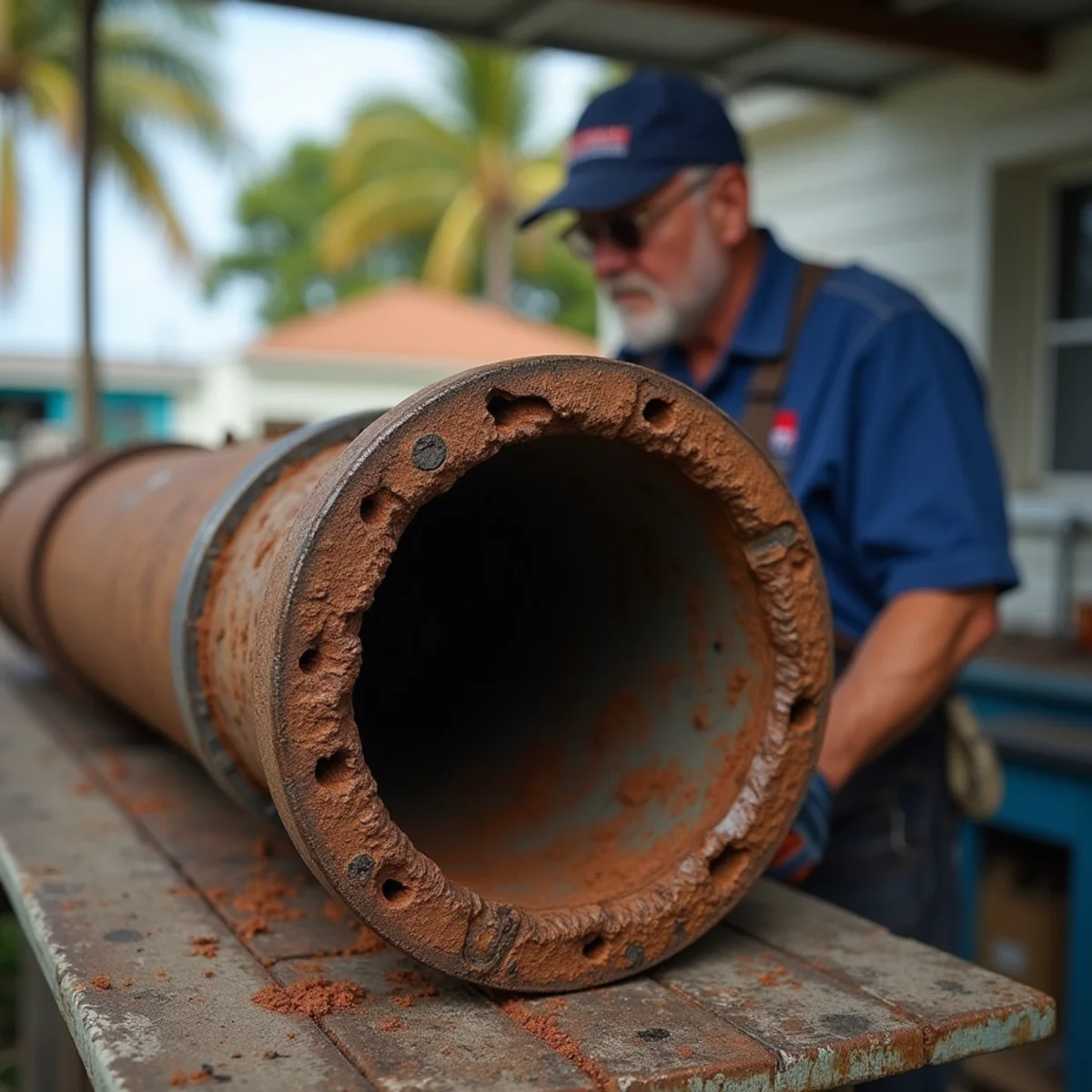
Cast iron drain pipes last roughly 50 years, so in older Florida homes the question is usually whether to repair a failing section or replace the system, and the answer depends on how far the corrosion has spread. If a single area is damaged and the rest of the line is sound, a spot repair or trenchless lining can be enough. If the pipe is channeling, cracking, or sagging in multiple places, replacement is the more economical long-term choice. A camera inspection is what turns that decision from a guess into a fact. Here is how cast iron fails, what to watch for, and how the options compare.
How long cast iron lasts and how it fails
Cast iron was the standard drain material in homes built before the mid-1970s, and many pre-1975 Florida homes still have it underground and in the walls. It is durable, but not permanent. Decades of waste water, sewer gases, and Florida's humidity corrode the pipe from the inside and outside at once. The common failure modes are:
- Channeling. The pipe bottom corrodes away, cutting a trough that lets solids catch and clog. This is the classic old-cast-iron failure.
- Corrosion and scale. Rust tubercles narrow the interior, slowing flow and snagging debris.
- Cracks. The metal grows brittle and fractures, letting water and roots in or out.
- Bellies. Sections sag as the surrounding soil shifts, creating low spots where waste pools and clogs repeatedly.
Warning signs your cast iron is going
- Recurring clogs and slow drains that come back no matter how often you snake them
- Sewage odors inside the home or around the yard
- Gurgling drains or toilets that bubble when another fixture runs
- Multiple backups happening at the lowest fixtures first
- Cracked slab tiles or damp spots over the drain line's path
- Discolored water or rust flakes in what drains slowly
One clog is a clog. A pattern of clogs, odors, and backups in a home that is 50-plus years old is the pipe telling you it is near the end.
Florida's environment speeds all of this up. High humidity, a high water table in many areas, and sandy soils that shift with rain and drought put constant stress on buried pipe. Aggressive tree and shrub roots seek out the moisture and nutrients inside a cracked sewer line and pry small fractures into major breaks. A cast iron line that might have reached sixty years in a dry climate often shows serious wear well before that here, which is why the age of the home is such a strong predictor of what a camera will find.
Why a camera inspection comes first
You cannot see inside a buried drain from the surface, so guessing leads to overspending or under-fixing. A sewer camera inspection, directional in the $150 to $400 range, sends a video probe through the line to show exactly where the channeling, cracks, or bellies are and how much healthy pipe remains. That footage is what lets us recommend repair versus replacement honestly instead of selling the biggest job. Our sewer line repair team starts here on every older-home drain call, because the tape does not lie.
Repair or replace, decided by evidence
One bad joint in an otherwise solid line points to repair. Widespread channeling, multiple cracks, or several bellies points to replacement. The camera is what tells you which situation you are actually in.
Repair, replace, and trenchless options
If the damage is localized, a spot repair replaces just the bad section. Where the line is accessible and mostly intact, trenchless lining (cured-in-place pipe) can create a new pipe inside the old one without digging up floors or the yard, which saves restoration cost and mess. When corrosion is widespread, full replacement of the drain system is the durable answer, often using modern PVC that will not corrode. Full or partial replacement in a slab home means opening and repatching concrete, which is why the camera-guided decision matters so much. Directional sewer repair ranges from about $1,000 to $5,000 and up depending on length, depth, and method.
What drives the cost
The main cost factors are the length of pipe involved, its depth and whether it runs under a slab, how accessible it is, the repair method chosen, and the restoration needed afterward. Permitting is part of a code-compliant job under the Florida Building Code. Every plumber we send is licensed and insured in Florida, and you get the price before work starts, confirmed at your property. Homeowners in Holiday and New Port Richey with mid-century homes ask us to inspect before they buy or sell, because a cast iron surprise is far cheaper to plan for than to discover after closing.
How to get more life from the pipe you have
If a camera shows your cast iron is worn but not yet failing, you can often buy time with good habits while you plan a replacement. Keep grease, coffee grounds, and food solids out of the drains, since they cling to rough, corroded interiors and build clogs quickly. Avoid harsh chemical drain cleaners, which accelerate corrosion in old cast iron rather than solving the underlying problem. Periodic professional cleaning, and hydro jetting where the pipe is still structurally sound, clears scale and channeling debris so the line drains freely a while longer.
None of this reverses corrosion; it manages a pipe that is on borrowed time. The value of a camera inspection is that it tells you exactly how much time you have, so you can budget a replacement on your schedule instead of reacting to a backup on a holiday weekend. For an older home you plan to keep, replacing a failing cast iron drain system with modern PVC is a one-time fix that ends the cycle of clogs and odors for good, and it removes a recurring expense that only grows as the pipe deteriorates further each year.
Old cast iron acting up?
Call Red Eagle Plumbers at (858) 363-8298 for a camera inspection. We show you what is really happening and price the fix before work starts.