
Water heater problems we repair
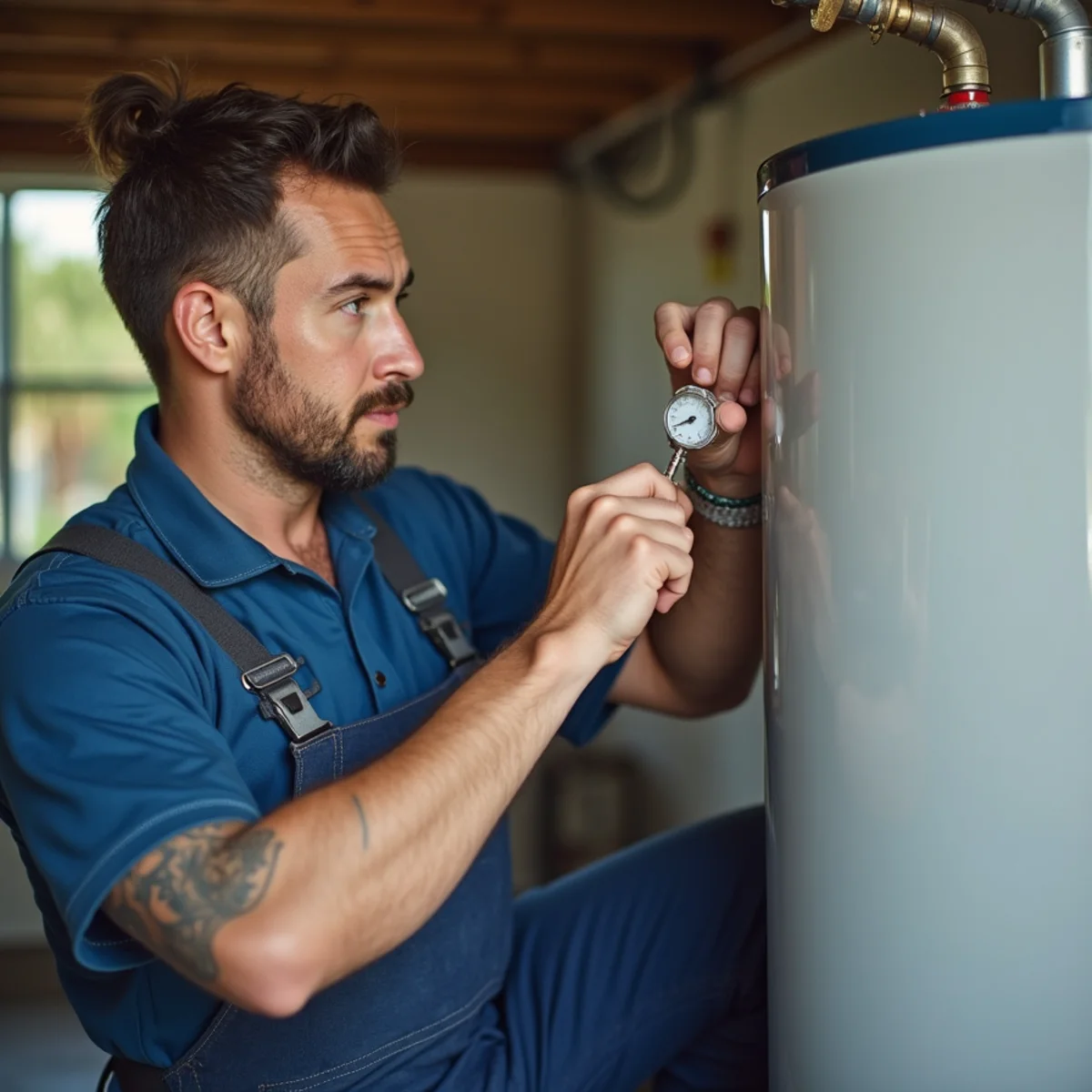
A water heater usually gives you a heads-up before it quits. The hot water runs out faster than it used to, the temperature swings, the water turns rusty or smells like rotten eggs, or the unit starts making a popping, rumbling sound as it heats. Any of those means it is time to look before you are standing in a cold shower or mopping up a garage floor.
We diagnose and repair both electric and gas units. Common fixes include replacing failed heating elements or a burned-out thermostat on electric heaters, relighting or replacing a faulty pilot, thermocouple or gas control valve on gas units, swapping a leaking temperature-and-pressure relief valve, and replacing a corroded anode rod. A tank flush to clear scale often restores lost capacity in an otherwise healthy unit.
- No hot water, or hot water that runs out too quickly
- Water too hot, too cold or swinging in temperature
- Rusty, cloudy or foul-smelling hot water
- Popping, rumbling or crackling noises from the tank
- Water pooling around the base of the heater
- The pilot will not stay lit, or the breaker keeps tripping
Repair or replace: how to decide
Not every problem is worth repairing, and a good plumber will tell you when you are throwing good money after a tank that is near the end. The deciding factors are age, the nature of the failure, and the cost of the repair relative to a new unit. A thermostat or element on a five-year-old heater is an easy yes to repair. A leak from the tank body itself is not repairable at all, because the steel has rusted through, and that means replacement.
The general rule we use: if the tank is leaking from the body, or the unit is past roughly ten to twelve years and needs a significant repair, replacement is usually the smarter spend. Below that, we repair. Many Tarpon Springs homes built between 1984 and 2000 are now on their second or third water heater, so if yours is original or unlabeled, it is worth knowing where it stands before it fails on its own schedule.
Leaking tank or no hot water?
Call (858) 363-8298 any time. We will diagnose it, tell you honestly whether to repair or replace, and price it before we start.
Tank water heater replacement (sizes, electric vs gas, permit)
When it is time for a new tank, sizing is the first decision. A 40-gallon unit suits many smaller households, while larger families or homes with big soaking tubs are better served by a 50-gallon. Undersize it and you run out of hot water; oversize it and you pay to heat water you never use. We size it to how your household actually uses hot water, not a one-size guess.
Electric versus gas usually comes down to what your home already has. Converting from one fuel to the other adds cost for wiring or gas lines and venting, so most replacements stay with the existing fuel type unless there is a strong reason to switch. We install a code-compliant setup with a new relief valve, drain pan, expansion tank where required, and proper shut-offs.
Permits and code
Water heater replacement in Tarpon Springs typically requires a permit, and the install must meet the Florida Building Code—Plumbing 8th Edition 2023. We handle the permit through the city and make sure the work passes inspection. Verify the current permit requirements with the City of Tarpon Springs before scheduling.
Tankless water heater installation
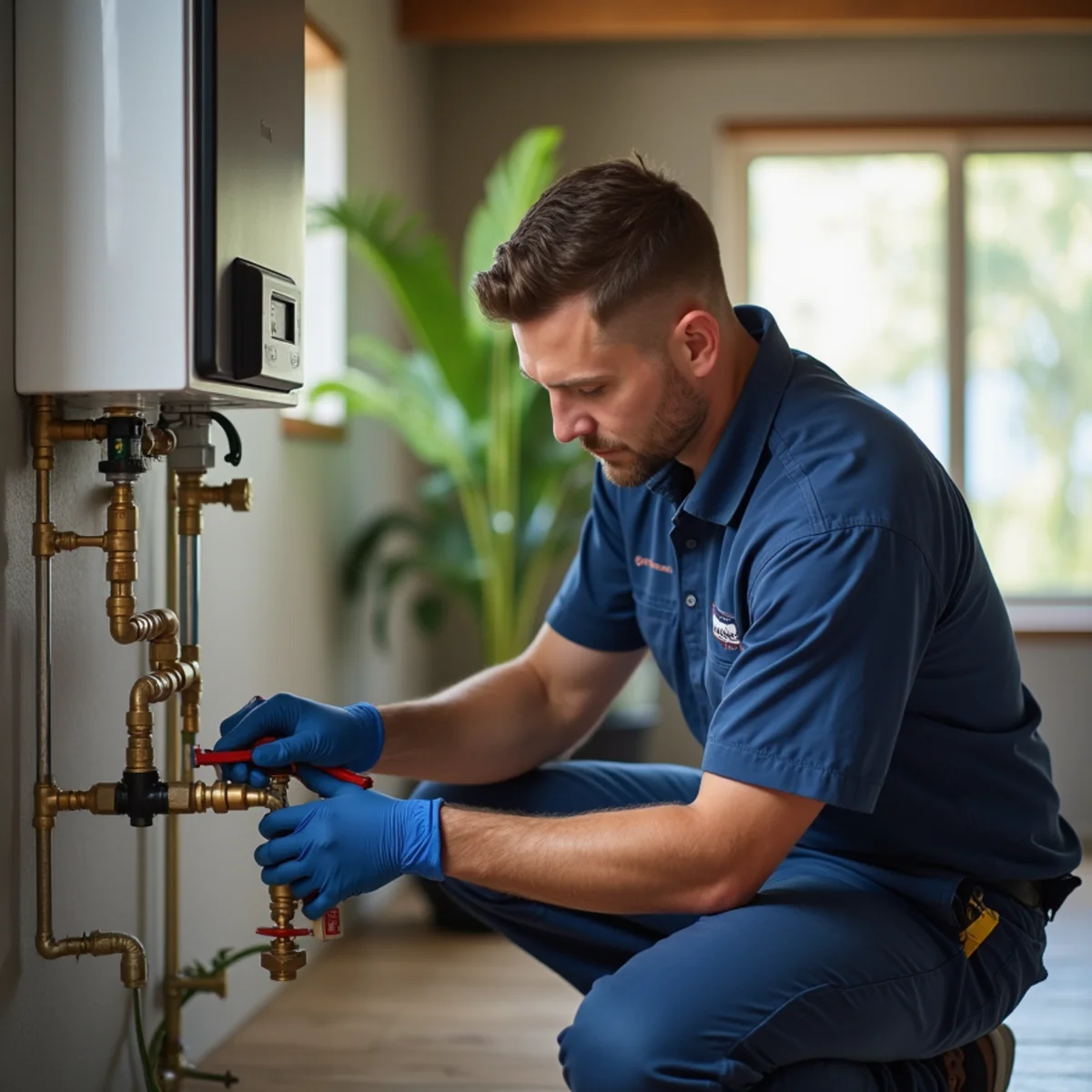
Tankless, or on-demand, heaters heat water only as you use it, so you get endless hot water and no standby tank sitting in the garage. For the right household they save space and energy over the long run. They are a bigger upfront investment and, in our very hard water, they need periodic descaling to protect the heat exchanger, but for many Florida homes they are an excellent fit, especially where garage space is tight.
Installing tankless is more involved than swapping a tank. Gas models often need a larger gas line and dedicated venting; electric models may need an electrical service upgrade to handle the load. We assess your home's gas, electrical and water supply, tell you plainly whether tankless makes sense for you, and size the unit to your peak demand so you never run short mid-shower.
Hard water in Pinellas County and what it does to your heater
Very hard water is the single biggest reason water heaters wear out early here. As the water heats, dissolved minerals drop out of solution and settle as a layer of scale on the bottom of the tank. That scale is what makes an aging heater pop and rumble: water gets trapped beneath it and boils. It also insulates the burner or element from the water, so the unit works harder, costs more to run, and dies sooner.
The best defense is maintenance. An annual flush clears sediment before it hardens, and checking the anode rod every few years keeps the tank itself from corroding. A whole-home water softener extends the life of the heater and every fixture in the house. We cover the full picture in our guide to how hard water affects your water heater in Pinellas County. If scale has already damaged your supply lines, a whole-home repipe may be part of the conversation too.
Need a plumber in Tarpon Springs now?
Want your heater to last longer? Ask about a flush and softener when you call (858) 363-8298.
How same-day replacement works
A failed water heater is an urgent problem, and in many cases we can replace it the same day. When you call, we confirm the fuel type, size and location, and bring the right replacement. Here is how a typical swap goes.
- We shut off the water, and the gas or power, and safely drain the old tank.
- The old unit comes out and we inspect the connections, shut-offs and venting.
- The new heater is set, connected, and fitted with a new relief valve, pan and expansion tank as required.
- We fill, purge the air, restore power or gas, and check for leaks.
- We confirm proper temperature, walk you through the new unit, and haul the old one away.
What affects water heater cost
The cost of a repair depends on the failed part and how accessible the unit is. Replacement cost depends on tank versus tankless, the size, the fuel type, whether the install needs code upgrades like an expansion tank or new venting, and the permit. A straight like-for-like tank swap in an easy location is the low end; a tankless conversion with gas and electrical upgrades is the high end.
- Repair versus replacement, and tank versus tankless
- Tank size (40-gallon versus 50-gallon) and fuel type (electric versus gas)
- Code upgrades — expansion tank, drain pan, venting or wiring changes
- Permit and inspection requirements
- Access and location of the unit, and whether it is an after-hours call
As directional market ranges, not a quote, water heater repairs commonly run about $150 to $700, a tank replacement roughly $800 to $2,000 (about $800 to $1,500 for a 40-gallon and $900 to $2,000 for a 50-gallon), and a tankless installation about $1,500 to $3,500. Your final price is confirmed at the property and given before any work starts. See our Tarpon Springs plumber cost guide for more detail.
Areas we cover around Tarpon Springs
We install and repair water heaters across Tarpon Springs, from Sunset Hills and Tarpon Shores to the older homes near Spring Bayou and the Anclote River. We also serve Palm Harbor, Holiday and Trinity, with the full list on our service areas page. After Hurricane Helene flooded parts of the area in September 2024, we replaced many storm-damaged heaters, so if yours took on floodwater, do not relight it, call us first.
Get your hot water back
Call (858) 363-8298 for water heater repair, replacement and tankless installs in Tarpon Springs, 24/7.