

Signs of a hidden leak (and a 10-minute water meter test)
A hidden leak is sneaky by nature. Because the water goes somewhere you cannot see, the first clue is often the bill. A water bill that jumps for no reason you can explain is the classic signal. Other signs include the sound of running water when every fixture is off, a warm or damp spot on the floor, a drop in water pressure, mildew smell, or a water heater that runs constantly because it is feeding a leak on the hot side.
You can run a simple test yourself before you call. Turn off every water-using fixture and appliance in the house. Find your water meter, usually near the street, and look at the leak indicator or the sweep hand. If it is moving with everything off, water is escaping somewhere in your system. Note the reading, wait ten to fifteen minutes without using any water, and check again; a change confirms a leak.
- A water bill that rises with no change in usage
- The sound of running water when everything is off
- A warm spot on the floor (a hot-water slab leak) or damp flooring
- Low water pressure, or a water heater that never seems to rest
- Cracks in flooring or walls, mildew smell, or unexplained moisture
- A water meter that keeps moving after you shut everything off
How leak detection works: acoustic, pressure and thermal methods
The whole point of professional leak detection is to find the leak precisely so the repair is small and targeted, rather than opening wall after wall or breaking up a whole floor to hunt for it. We combine several non-destructive methods and cross-check them until we can mark the leak's location within inches.
Acoustic listening
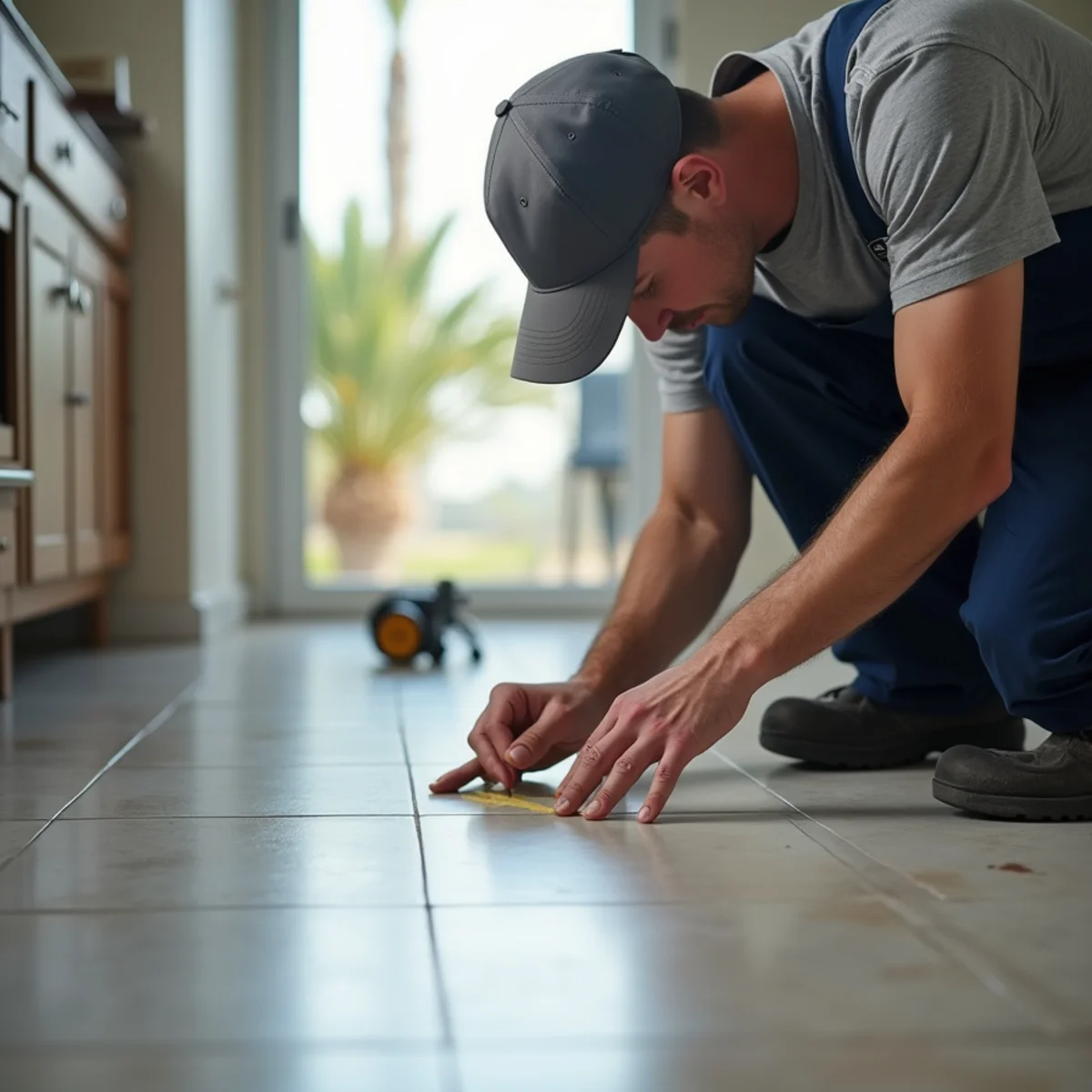
Pressurized water escaping a pipe makes a distinct sound. Sensitive ground microphones and amplifiers let us hear that sound through concrete and tile and trace it to its loudest point, which is directly over the leak. This is the primary tool for pinpointing a slab leak.
Pressure testing and thermal imaging
We isolate sections of the system and watch for pressure loss to confirm whether the leak is on the hot or cold line and narrow down the run. Thermal cameras reveal the temperature difference a hot-water leak creates under a floor or behind a wall. Line tracing and, where useful, a small amount of inert gas help confirm the exact spot before we ever pick up a tool to open anything.
Suspect a hidden leak?
Call (858) 363-8298. We will locate it precisely before opening a single wall or slab, and price the repair before we start.
Slab leak repair options: spot repair, reroute, repipe
Once a slab leak is located, there are three main ways to fix it, and the right one depends on the pipe's age, the number of leaks, and the pipe material. A single leak in otherwise good copper is a very different situation from a first leak in a pipe that is going to keep failing.
- Spot repair — we open the slab at the marked location and repair that one section. Best when the pipe is otherwise sound and it is a lone leak.
- Reroute — we abandon the leaking under-slab section and run a new line overhead or through walls, avoiding the slab entirely. A good middle path when one line has failed.
- Repipe — when the pipe material is failing system-wide, replacing all the supply lines is the lasting fix. See our whole-home repiping service.
We give you the honest tradeoffs. Spot repair is cheapest today but can mean opening the slab again if the same pipe leaks elsewhere next year. A reroute or repipe costs more upfront but ends the cycle. For a pipe that has leaked once and is likely to leak again, spending a little more now often saves a lot later.
Why slab leaks happen in Tarpon Springs homes
Slab leaks are common here for reasons specific to this market. Most homes are slab-on-grade, meaning the supply pipes run within or beneath the concrete foundation. When one of those buried pipes fails, the water has nowhere to go but into the slab and up through the floor. Combine that construction with the age and materials of local plumbing and you have the perfect conditions.
Very hard water corrodes copper from the inside, producing the pinhole leaks that plague slab lines. Homes from the polybutylene era, roughly 1978 to 1995, have supply lines that fail at the fittings. Sandy soil shifts and abrades pipe where it exits the slab, and there is no freeze risk here to blame, these are corrosion and material failures, not burst-from-cold pipes. Our post on the signs of a slab leak in Florida homes goes deeper on what to watch for.
What to do right now if you suspect a leak
If you think water is escaping and you cannot see the source, a few quick steps limit the damage while you wait for a plumber. Acting fast matters, because the EPA points to a 24 to 48 hour window before trapped moisture starts feeding mold growth.
- Locate your main shut-off valve and turn off the water if damage is active or spreading.
- Move furniture, rugs and belongings away from any wet area.
- Take photos and video of the damage and standing water for your records.
- Do not cut into walls or floors yourself; that can turn a covered claim into a bigger problem.
- Call (858) 363-8298 so we can locate and stop the leak before more water gets in.
Documenting a leak for your insurer
Insurance treatment of leaks in Florida is nuanced, and good documentation is your best friend. In general, sudden and accidental water damage is more likely to be covered than slow, long-term seepage or the cost of the failed pipe itself. That distinction is exactly why finding and dating the leak precisely helps your claim.
We document what we find, the location, the nature of the failure, and the repair, so you have a clear record for your adjuster. Photograph everything before repairs, keep receipts, and report promptly. Our guide to insurance and plumbing leaks in Florida explains what tends to be covered and how to strengthen a claim. We do not give legal or coverage advice; your policy and adjuster decide.
Need a plumber in Tarpon Springs now?
Water actively leaking? Shut off the main and call (858) 363-8298 for 24/7 leak location and repair.
What affects leak detection and slab leak cost
Detection cost depends on how difficult the leak is to isolate and how many methods it takes to pin down. Repair cost depends on where the leak is, how the pipe is accessed, the flooring above it, and whether you spot-repair, reroute or repipe. A leak under an open tile floor is easier to reach than one beneath a kitchen island or an exterior wall.
- Difficulty of locating the leak and the methods required
- Location and depth of the pipe, and the flooring above it
- Repair approach — spot repair, reroute, or full repipe
- Pipe material and whether it is likely to fail again
- Any water-damage cleanup needed, and whether it is an after-hours call
As directional market ranges, not a quote, leak detection in this area commonly runs about $200 to $600, and slab leak repair about $1,500 to $4,500 depending on the method and access. Your final price is confirmed at the property and given before any work starts. Our Tarpon Springs plumber cost guide has more detail on local pricing.
Areas we cover around Tarpon Springs
We provide leak detection and slab leak repair across Tarpon Springs, from Sunset Hills and Tarpon Shores to the older homes around Spring Bayou and Lake Tarpon. We also serve Palm Harbor, Holiday and Trinity; the full list is on our service areas page. When a leak points to a bigger pipe problem, our plumbing repair and repiping teams pick up seamlessly.
Find the leak before it finds your foundation
Call (858) 363-8298 for precise, non-destructive leak detection and slab leak repair in Tarpon Springs.