
Does your home need a repipe? The signs
Repiping is not something you do on a whim, but there is a point where patching individual leaks stops making financial sense. When the same pipe material keeps failing in different spots, you are no longer fixing a problem, you are chasing one. The signs below, especially two or three together, usually mean the supply system as a whole is at the end of its service life.
- Repeated pinhole leaks in copper, or repeated fitting leaks in gray polybutylene
- Low or dropping water pressure throughout the house
- Rusty, brown or metallic-tasting water, a sign of corroding galvanized pipe
- Water that takes forever to get hot, or pressure that drops when two fixtures run
- Known polybutylene or galvanized piping flagged on an inspection
- An insurer asking about your pipe material or declining to renew over it
If you are already paying for repeat leak detection and slab leak repair on the same system, a repipe is often the cheaper path over just a few years. Add up what you have spent chasing individual leaks, factor in the water lost and the damage each one caused, and the math frequently favors replacing the whole system once rather than patching it again and again. We will give you the honest numbers for your home so you can decide with real figures, not a sales pitch.
Pipe materials in Tarpon Springs homes by decade
Because the median local home dates to around 1984, the pipe material in your walls tracks closely with when the house was built. Knowing the era tells us a lot before we even open a wall.
| Era built | Likely supply pipe | Typical concern |
|---|---|---|
| Before 1975 | Galvanized steel | Rusts closed from the inside; low pressure, brown water, thread leaks |
| 1978–1995 | Polybutylene (gray) | Fails at fittings without warning; a known insurance problem |
| 1970s–2000s | Copper | Pinhole leaks from hard, aggressive water over time |
| 2000s–today | CPVC or PEX | Generally reliable; PEX is the current standard for repipes |
This is a guide, not a guarantee, homes get partial re-plumbs and additions over the years. The only way to know for certain what you have is to look, which we do as part of every repipe estimate.
Not sure what is in your walls?
Call (858) 363-8298 for a free repipe estimate. We will identify your pipe material and give you honest options.
Polybutylene, 4-point inspections and Florida home insurance
Polybutylene deserves its own section because of how much it affects Florida homeowners. This gray plastic pipe was used widely from the late 1970s into the mid-1990s, then fell out of favor after widespread failures at its fittings. The trouble is that it can fail suddenly and without any warning sign, which is why insurers treat it as a serious risk.
In Florida, older homes typically require a 4-point inspection to obtain or renew coverage, and plumbing is one of the four points. If that inspection finds polybutylene, many carriers will decline, refuse to renew, or charge substantially more until it is replaced. Repiping out the polybutylene removes that obstacle and often makes a home insurable again on normal terms. Our guides on polybutylene pipes in Pinellas County and insurance and plumbing leaks in Florida cover this in depth.
PEX vs CPVC vs copper
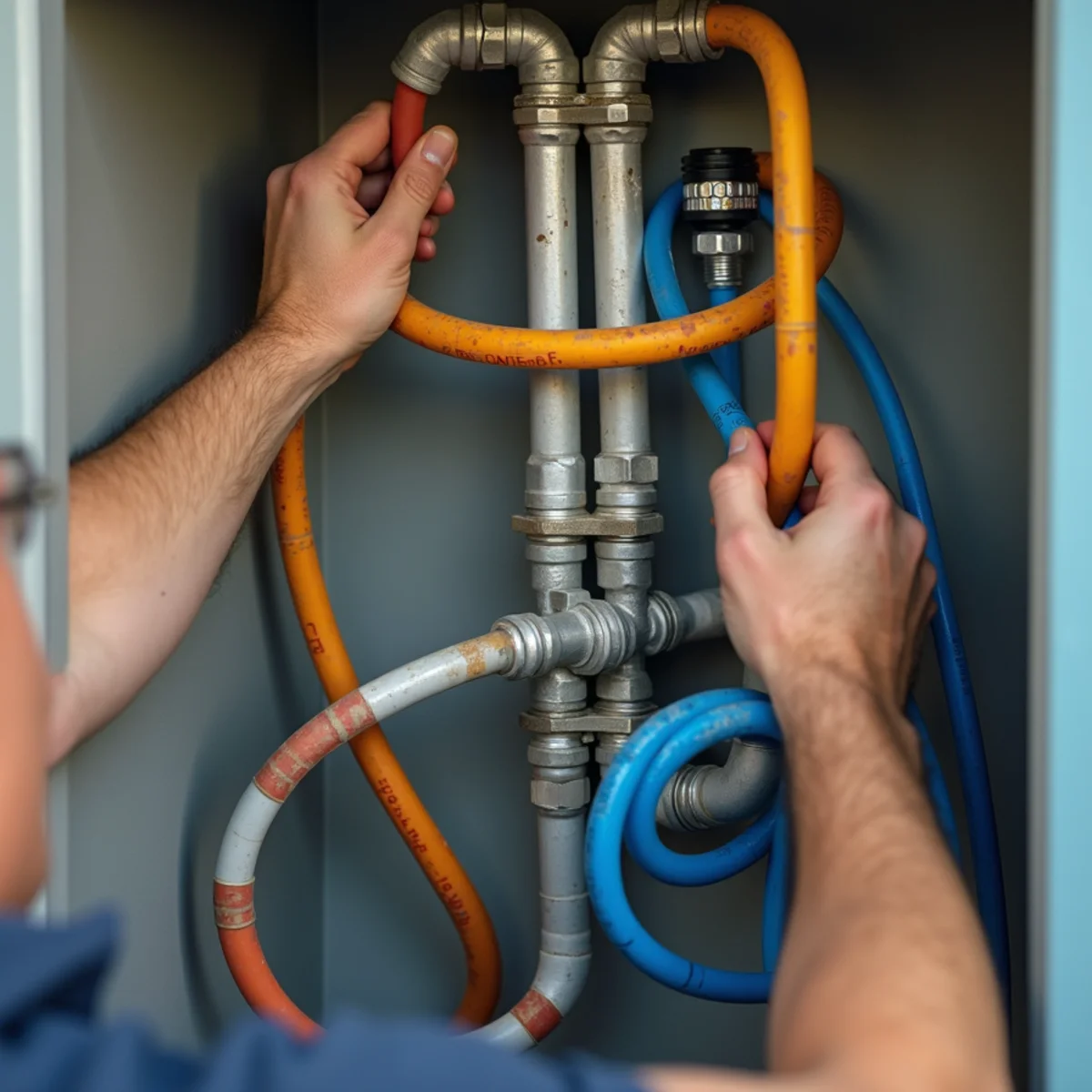
For a whole-home repipe we most often recommend PEX, and for good reasons in this market. PEX is a flexible plastic tubing that installs with fewer joints, resists the scale and corrosion that our very hard water inflicts on metal, and handles Florida conditions well. Fewer joints inside the walls means fewer potential leak points, and its flexibility means less drywall opened during installation.
- PEX — flexible, corrosion-resistant, fewer fittings, less wall demolition; our usual recommendation.
- CPVC — rigid plastic, proven and cost-effective, but more joints and more brittle with age.
- Copper — long-established and durable, but the priciest option and still vulnerable to pinhole leaks in aggressive water.
We will explain the tradeoffs for your specific home and budget rather than pushing one product. Whatever material you choose, every plumber we send is licensed and insured in Florida, and the work meets the Florida Building Code—Plumbing 8th Edition 2023.
Why PEX holds up in our water
Our very hard water is what shortens the life of metal pipe in this area. Scale builds inside copper and galvanized lines, narrowing them and setting up the corrosion that leads to pinholes and rust. PEX does not scale or corrode the way metal does, so it sidesteps the exact failure mode that sends most Tarpon Springs homes into a second repipe. That is why, for a home that has already been through one round of leaks, PEX is usually the material that ends the cycle rather than restarting the clock. A repipe done well should be the last time you think about your supply lines for decades.
The repipe process day by day (permit, water shut-offs, drywall)
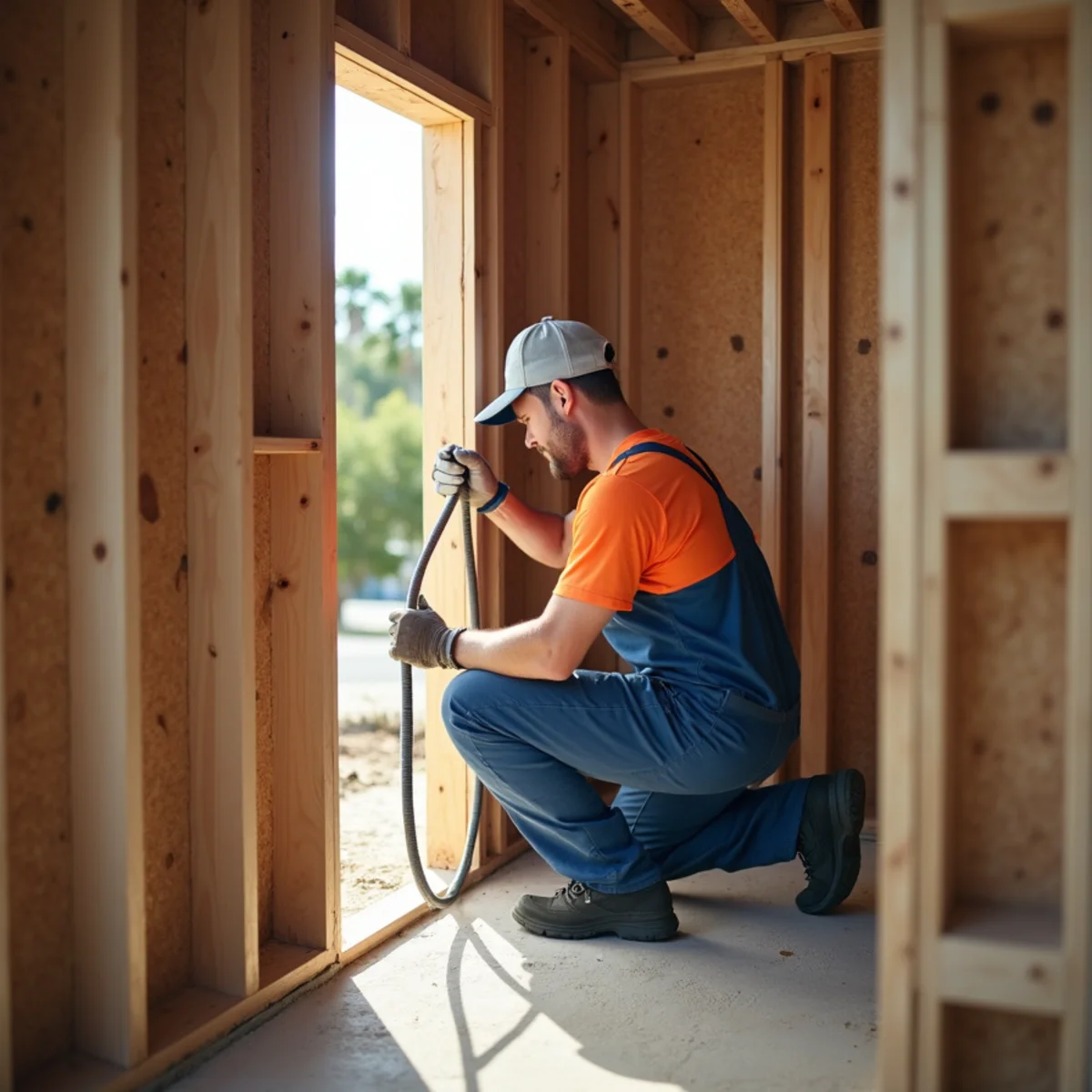
A whole-home repipe sounds daunting, but a well-run project is organized and predictable, and most homes stay livable throughout. Here is how a typical repipe unfolds.
- Estimate and permit — we assess your home, confirm the pipe material, provide a firm estimate, and pull the required permit through the city.
- Protect and open — we cover floors and furniture and make small, strategic access openings in the drywall to reach the pipe runs.
- Install new lines — we run the new PEX to every fixture, tie in the water heater and connections, and set new shut-offs.
- Test and inspect — we pressure-test the system, then the work is inspected to confirm it meets code.
- Patch and finish — we patch the drywall openings and restore the walls so your home looks right again.
Water is shut off only during key stages, and we schedule those to minimize the time your household is without it. Most repipes are completed in a matter of days, not weeks, depending on the size of the home. If a permit is needed and the job value exceeds the threshold, a Notice of Commencement may be filed through Tarpon Springs GoPost; verify the current threshold, which has been $5,000 in the past.
Need a plumber in Tarpon Springs now?
Ready to stop chasing leaks? Call (858) 363-8298 for a free whole-home repipe estimate.
What affects repipe cost
Repipe pricing varies more than most services because it scales with the home. The biggest drivers are the size of the house, the number of bathrooms and fixtures, the pipe material chosen, how the pipes are routed, whether it is single or two-story, and how much drywall repair the job involves. A compact single-story home is a very different project from a large two-story with multiple baths.
- Home size and number of fixtures and bathrooms
- Pipe material — PEX, CPVC or copper
- Single-story versus multi-story, and how accessible the pipe runs are
- Slab-on-grade routing considerations
- Amount of drywall repair and finishing, plus permit and inspection
As directional market ranges, not a quote, a repipe for a smaller home commonly runs about $3,000 to $7,000, and a larger home about $6,000 to $15,000 or more. Because these projects vary so widely, an accurate number requires seeing the home. Your final price is confirmed at the property before any work starts, and we provide a free estimate. See our Tarpon Springs plumber cost guide for context.
Areas we cover around Tarpon Springs
We repipe homes throughout Tarpon Springs, including the polybutylene-era neighborhoods in Sunset Hills and Tarpon Shores and the older galvanized homes near Historic Downtown and Spring Bayou. We also serve Palm Harbor, Holiday and Trinity; the complete list is on our service areas page. A repipe pairs naturally with water heater replacement and any lingering plumbing repairs, which we can handle in the same project.
End the leaks with a whole-home repipe
Call (858) 363-8298 for a free estimate on PEX repiping in Tarpon Springs, done to code with drywall restored.