
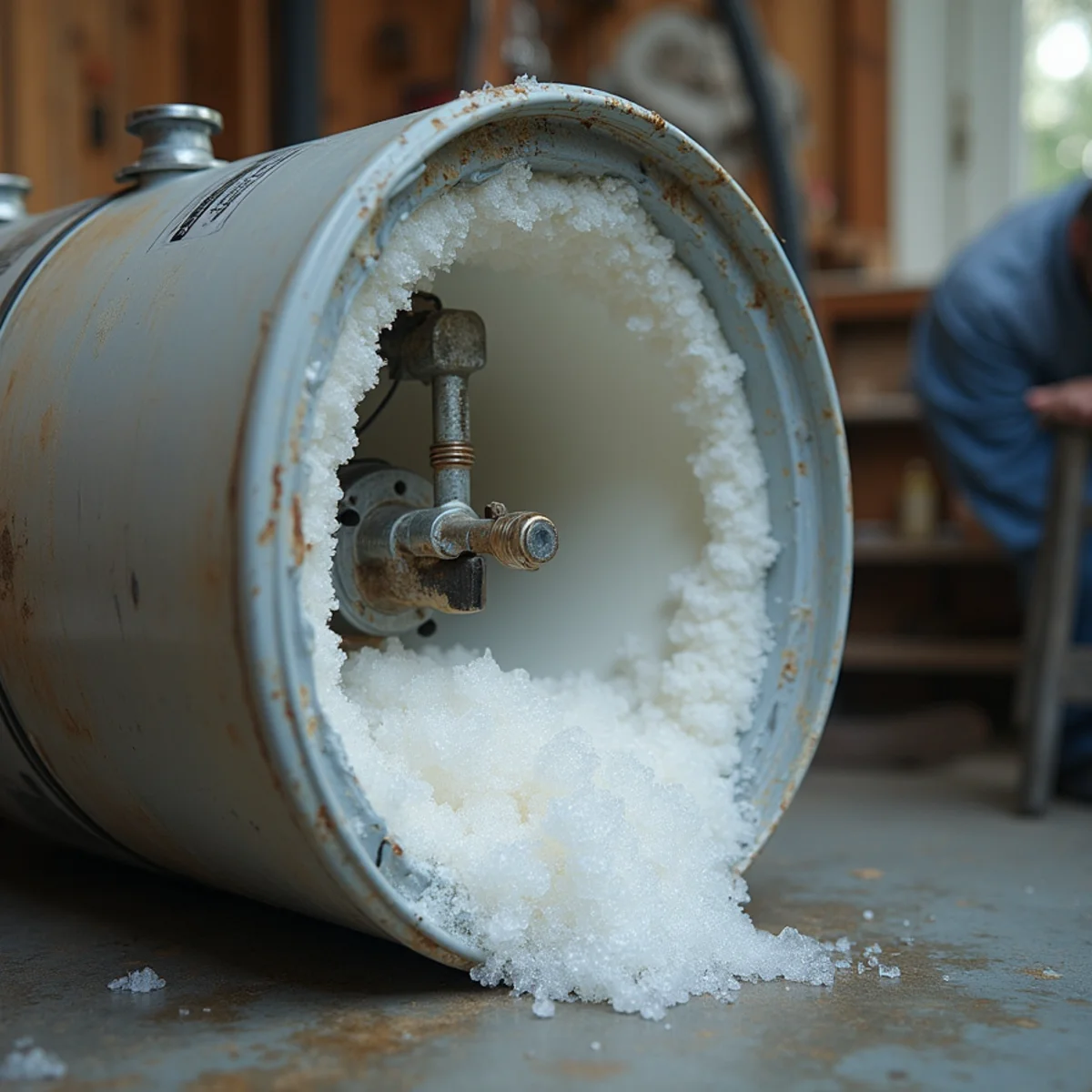
Hard water shortens the life of your water heater by depositing mineral scale and sediment that insulate the tank bottom, force the unit to work harder, and lead to popping noises, higher energy bills, and early failure. In Pinellas County, water has historically been very hard, and while the city has moved to reverse-osmosis treatment that has lowered calcium hardness substantially, minerals still accumulate in a heater over time. The fix is not complicated: regular flushing, anode-rod checks, and, for many homes, a water softener or filtration system. Here is what hard water actually does inside the tank and how to protect the investment.
How hard is the water here?
The region's water has long been considered very hard. Utilities in the area have shifted toward reverse-osmosis treatment, and reported calcium hardness has come down considerably from prior levels, with figures cited around 45 mg/L versus a previous level near 192 mg/L. Treatment varies by source and time, so the exact hardness at your tap can differ, and it is worth confirming with your utility's current water-quality report. Even at the lower, treated levels, dissolved minerals still settle and bake onto heating surfaces over years of use, which is why maintenance matters regardless of the headline number.
What scale and sediment do inside the tank
- Sediment layer on the tank bottom. Minerals drop out of hot water and form a hard crust over the burner or lower element, insulating it from the water.
- Popping and rumbling. Water trapped under that crust boils and forces its way out, creating the popping or kettle sounds many homeowners notice.
- Higher energy bills. The insulating layer means the heater runs longer to hit temperature, wasting gas or electricity.
- Overheating and metal fatigue. Trapped heat stresses the steel tank and can crack a glass lining or burn out an element early.
- Reduced hot-water capacity. Sediment takes up volume, so you run out of hot water sooner than you used to.
- Shortened lifespan. All of the above adds up to a heater that fails years before it should.
Maintenance that extends heater life
The single most effective habit is an annual flush. Draining the tank clears loose sediment before it hardens, and it takes under an hour. Checking the anode rod every few years matters too: this sacrificial rod corrodes so the tank does not, and in hard-water areas it wears out faster. Replacing a spent anode rod is far cheaper than replacing a rusted-through tank. Setting the thermostat to a sensible temperature reduces mineral drop-out as well. If your heater is already noisy or slow to recover, our water heater repair and maintenance service can flush it, test the anode, and tell you honestly whether repair or replacement is the better value.
A simple maintenance rhythm keeps a heater healthy: flush the tank once a year, inspect the anode rod every two to three years and replace it when it is mostly consumed, test the temperature-and-pressure relief valve annually, and listen for new popping or rumbling between visits. A heater that gets this attention often outlasts one that is left alone by several years, which turns a routine service cost into real savings against an early replacement.
A noisy heater is a warning, not a quirk
Popping and rumbling mean sediment has built up. Left alone, it accelerates tank wear. A flush often quiets the unit and buys years of extra service, but only if you act before the tank corrodes.
Softeners, filtration, and treating the whole home
If minerals are damaging your heater, they are also scaling faucets, coating fixtures, spotting glassware, and stiffening laundry. A whole-home water softener uses ion exchange to remove hardness before water reaches the heater and the rest of the house, which protects appliances and improves how everything feels. Some homeowners prefer a salt-free conditioner or a targeted filtration system depending on their water and preferences. Treating water at the point of entry is the most reliable way to slow scale everywhere at once, and it pairs well with a new heater to maximize its lifespan.
Tank vs. tankless in hard water
Tankless heaters are efficient and space-saving, but they are actually more sensitive to scale than tank units because water is heated rapidly through a narrow heat exchanger where minerals concentrate. In hard water, a tankless unit needs periodic descaling to stay efficient, and manufacturers often require it to keep the warranty valid. A tank heater tolerates sediment longer but should still be flushed yearly. Neither is automatically better here; the right choice depends on your household size, hot-water demand, and whether you install a softener. Directional pricing runs roughly $800 to $2,000 for a tank replacement and $1,500 to $3,500 for a tankless install, with the final price confirmed at your property.
Every plumber we send is licensed and insured in Florida, and we give you the price before work starts. Homeowners in Trinity and across North Pinellas ask us to look at the whole picture, water treatment plus the heater, because solving the water quality is what makes a new heater last.
Signs your heater is losing the battle
Hard water rarely fails a heater overnight; it wears it down with symptoms you can learn to read. Watch for rust-tinted hot water, which suggests the tank interior is corroding, and cloudy or gritty hot water, which points to sediment breaking loose. If your hot water runs out faster than it used to, sediment is stealing tank capacity. Rising energy bills with no change in habits often mean the burner or element is fighting through a scale layer. And any popping, crackling, or rumbling is trapped water boiling under sediment, a clear call for a flush.
Catching these early is the difference between a maintenance visit and a replacement. A rust-tinted supply and a tank that is more than a decade old usually means the end is near, and it is smarter to plan a replacement than to wait for the tank to split and flood the space around it. If you are unsure how far along your heater is, an inspection settles it quickly and points you to the least expensive path that will actually hold.
Heater noisy or running out of hot water?
Call Red Eagle Plumbers at (858) 363-8298. We flush, repair, or replace, and advise on softeners, with a price before any work starts.