
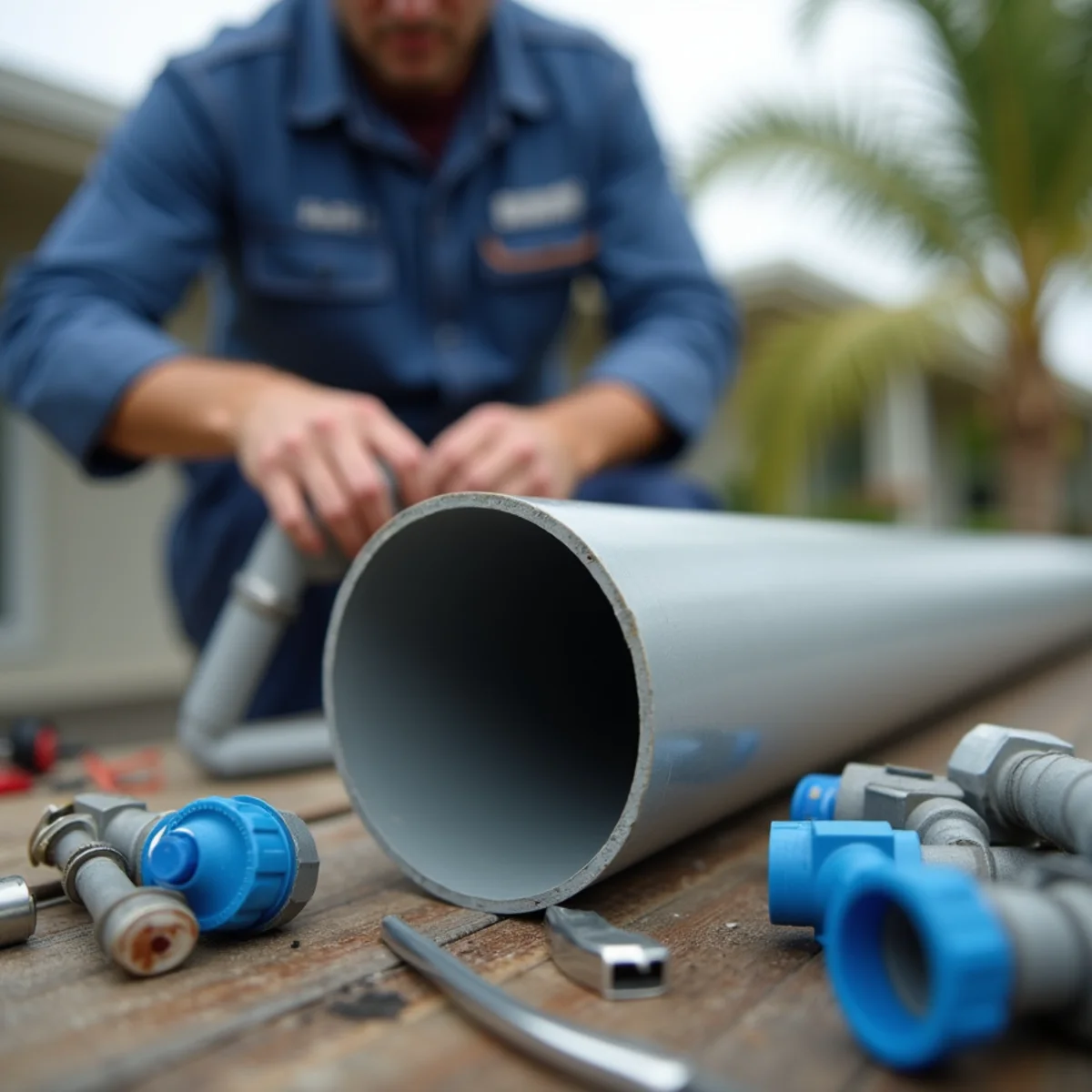
Polybutylene is a grey or blue-grey plastic water pipe installed in many homes from roughly 1978 to 1995, and if your Pinellas County home has it, replacing it is usually the right call. The material becomes brittle over time and can fail without warning, which is why many Florida insurers now decline or non-renew policies on homes that still have it, and why it shows up as a red flag on 4-point inspections. The good news: identifying it is straightforward, and a repipe with PEX or CPVC is a well-established fix. Here is how to check, what it means for your coverage, and what the replacement actually involves.
What polybutylene is and why it fails
Polybutylene, often abbreviated PB, was a low-cost plumbing material used widely during the building boom of the late 1970s through the mid-1990s. Given that the median Tarpon Springs home was built around 1984, a large share of local homes fall squarely inside that window. The pipe was cheap and easy to install, but chlorine and other oxidants in municipal water react with the material over time, causing it to flake and grow brittle from the inside out. Micro-fractures form, and eventually the pipe splits, often at fittings, sometimes inside a wall or slab where a slow leak does damage before anyone notices.
The failures are unpredictable, which is the core problem. A PB system can look fine for years and then let go without a warning sign. That uncertainty is exactly what insurers price against.
Our local water conditions do not help. Pinellas County water has historically been very hard, and although the city has moved to reverse-osmosis treatment that has lowered calcium hardness, the chlorine used to keep municipal water safe is precisely what degrades polybutylene from the inside. So even where the pipe has not visibly leaked, decades of treated water have often left the interior brittle. That is why plumbers rarely recommend patching a PB leak: fixing one fitting does nothing for the rest of a system that is aging at the same rate everywhere.
How to identify polybutylene in your home
- Color: most commonly grey, sometimes blue-grey or black, with a matte plastic surface.
- Diameter: typically half-inch to one-inch, similar in size to other supply lines.
- Markings: look for the code 'PB2110' stamped on the pipe.
- Where to look: at the water heater, under sinks, near the main shut-off, and at the point where the water line enters the house.
- Fittings: older systems used grey acetal (plastic) or copper crimp fittings, which are common failure points.
Do not confuse PB with modern PEX, which is common today and comes in blue, red, and white. If you are unsure, a plumber can confirm it in minutes. It is worth checking, because misidentifying your pipe can cost you an insurance policy or a home sale.
Insurance and the 4-point inspection
In Florida, insurers frequently require a 4-point inspection on older homes, covering the roof, electrical, HVAC, and plumbing. Polybutylene almost always gets flagged on the plumbing portion. Many carriers will not write or renew a policy until the PB is replaced, and some exclude water-damage claims tied to it. If you are buying, selling, or shopping for a new policy on a home built between 1978 and 1995, this is one of the first things to check. Replacing PB often makes a home insurable again and can be a condition of closing.
Not legal or insurance advice
Coverage rules vary by carrier and change over time. Confirm your specific policy requirements with your insurer or agent. This article explains the general landscape, not the terms of your policy.
Repipe options: PEX and CPVC
The two standard replacements are PEX and CPVC. PEX is a flexible tubing that installs quickly, handles our hard water well, resists freeze damage, and requires fewer fittings, which means fewer potential leak points. CPVC is a rigid plastic that has been used reliably for decades and is a solid choice in many homes. The best pick depends on your layout, water conditions, and budget. A whole-home repipe done under permit and inspection restores value, insurability, and peace of mind at once.
What the repipe process looks like
A typical repipe starts with a walkthrough to map every supply run, followed by a written scope and price. New lines are routed, usually through walls, attics, and ceilings, connections are made at each fixture, and the system is pressure-tested before the old PB is abandoned or removed. Then comes drywall patching and cleanup. Most homes are done in a matter of days, and we work to keep the water on as much as possible. Permitting is part of a code-compliant job. Homeowners in Palm Harbor and Oldsmar regularly schedule repipes ahead of a policy renewal or a sale, and planning it before an emergency leak is always cheaper than reacting to one.
Every plumber we send is licensed and insured in Florida, and we pull the required permits so your repipe passes inspection and satisfies your insurer. You get the price before work starts, confirmed at your property.
Replace before it fails, not after
The strongest argument for a planned repipe is cost control. A scheduled whole-home repipe runs in a directional range of roughly $3,000 to $15,000 and up depending on home size, pipe routing, and finishes, and it happens on your calendar with the water managed and the mess contained. A PB failure, by contrast, tends to strike inside a wall or above a ceiling while you are asleep or away, adding water damage, drywall, flooring, and possibly mold remediation on top of the plumbing bill. One is a home improvement; the other is a disaster you pay to clean up.
There is a real estate angle as well. Buyers and their inspectors know what polybutylene is, and a home that still has it often draws a repair credit demand or a lost sale. Replacing it ahead of listing removes that friction and can be marketed as a completed upgrade. Whether you are staying or selling, moving off PB is one of the few plumbing decisions that pays back in insurability, value, and peace of mind at the same time.
Have polybutylene pipes?
Call Red Eagle Plumbers at (858) 363-8298 for a repipe assessment. We identify your pipe, scope the job, and price it before any work begins.